

Residential Garden · London, 2024
Residential Garden · London, 2024
The role of natural landscape flow today explained
The role of natural landscape flow today explained

James Carter
Founder & Lead Designer
Published
Reading time
9 min read
When planting, materials, and features are placed without understanding movement or structure, the result becomes visually attractive but functionally confusing. Over time, this approach creates fragmentation, where spaces feel disconnected and difficult to experience naturally.
- The Problem with Decoration
Understanding natural landscape flow
Natural landscape flow is the seamless connection between movement, structure, and planting that allows a space to feel intuitive and effortless. It is not created by decorative elements alone, but by carefully organizing how people move, how space is divided, and how visual transitions occur across the site.
When flow is considered from the beginning of the design process, landscapes become easier to navigate and more comfortable to experience. The space feels unified, where every transition supports clarity and natural rhythm rather than disruption.
Key Principle
True flow is achieved through structure-first thinking, not surface-level decoration. This means understanding spatial relationships before selecting materials or planting schemes, ensuring that every element contributes to a coherent system.
Key Principle
True flow is achieved through structure-first thinking, not surface-level decoration. This means understanding spatial relationships before selecting materials or planting schemes, ensuring that every element contributes to a coherent system.
When planting, materials, and features are placed without understanding movement or structure, the result becomes visually attractive but functionally confusing. Over time, this approach creates fragmentation, where spaces feel disconnected and difficult to experience naturally.
- The Problem with Decoration
Understanding natural landscape flow
Natural landscape flow is the seamless connection between movement, structure, and planting that allows a space to feel intuitive and effortless. It is not created by decorative elements alone, but by carefully organizing how people move, how space is divided, and how visual transitions occur across the site.
When flow is considered from the beginning of the design process, landscapes become easier to navigate and more comfortable to experience. The space feels unified, where every transition supports clarity and natural rhythm rather than disruption.
Key Principle
True flow is achieved through structure-first thinking, not surface-level decoration. This means understanding spatial relationships before selecting materials or planting schemes, ensuring that every element contributes to a coherent system.

When flow is properly designed, the landscape becomes self-guided, intuitive, and naturally balanced over time.
When flow is properly designed, the landscape becomes self-guided, intuitive, and naturally balanced over time.
The Three Layers of Structure
Designing structure, movement, planting together
The three layers of structure define how landscapes are organized through spatial clarity, material performance, and planting integration. Together, they form a unified system that ensures long-term balance, functional movement, and visual coherence. This layered approach allows landscapes to evolve naturally while maintaining order, simplicity, and design intent.
Spatial layer organizes movement, defines hierarchy, and creates clear relationships between zones, ensuring the landscape remains readable, functional, and easy to navigate over time without confusion or visual disruption across the entire design system.
Material layer provides structural stability, durability, and environmental resilience through carefully selected surfaces and construction methods, ensuring long-term performance while supporting drainage, load distribution, and consistent spatial expression throughout the landscape framework.
Planting layer introduces seasonal variation, ecological diversity, and natural softness, responding to the underlying structure while enhancing visual richness and ensuring the landscape evolves in harmony with its spatial and material foundations over time.
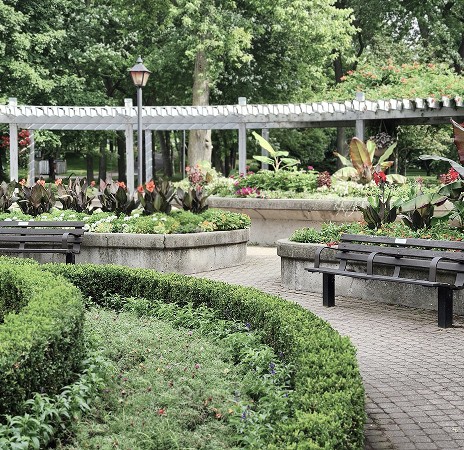
Material alignment ensures uninterrupted visual and physical movement through space.

The same garden with planting layered into the resolved framework — structure makes planting legible.
Material alignment ensures uninterrupted visual and physical movement through space.
The same garden with planting layered into the resolved framework — structure makes planting legible.
Designing flow in modern landscapes
Designing flow in modern landscapes focuses on creating seamless connections between movement, structure, and planting so that every space feels intuitive, balanced, and easy to experience. Instead of relying on decorative placement, the design prioritizes spatial clarity and natural circulation patterns. This ensures that users move through the landscape effortlessly while each element supports a unified sense
Movement is planned first to ensure natural circulation, clear transitions, and intuitive navigation throughout the landscape without confusion or interruption in spatial experience or visual continuity over time.
Structure defines spatial order by organizing zones, edges, and hierarchy, ensuring each area connects logically while maintaining balance, clarity, and long-term functional performance across the entire design system.
Planting is integrated after structure, adding softness, seasonal variation, and ecological depth while responding to spatial organization and reinforcing natural flow without disrupting visual or functional balance.
Materials support flow by guiding movement, enhancing continuity, and providing durable surfaces that maintain visual rhythm, stability, and coherence across all areas of the landscape design system.
94%
Well-defined structure ensures smoother movement.
5X
Consistent material and planting integration creates uninterrupted.
30yr
Clear spatial organization improves comfort, navigation.
94%
Well-defined structure ensures smoother movement.
5X
Consistent material and planting integration creates uninterrupted.
30yr
Clear spatial organization improves comfort, navigation.
Flow as design strategy
Flow as a design strategy focuses on shaping how people move through and experience a landscape rather than simply how it looks. It prioritizes spatial connections, transitions, and rhythm, ensuring that every area feels naturally linked. Instead of treating spaces as separate zones, flow integrates them into a continuous experience where movement feels intuitive, guided, and effortless.
When flow is designed intentionally, it becomes the invisible framework that supports structure, planting, and materials. This approach ensures that every design decision contributes to a unified spatial experience. As a result, the landscape feels more coherent, easier to navigate, and more comfortable to occupy, with each element reinforcing a sense of clarity and direction throughout the space.
The Three Layers of Structure
Designing structure, movement, planting together
The three layers of structure define how landscapes are organized through spatial clarity, material performance, and planting integration. Together, they form a unified system that ensures long-term balance, functional movement, and visual coherence. This layered approach allows landscapes to evolve naturally while maintaining order, simplicity, and design intent.
Spatial layer organizes movement, defines hierarchy, and creates clear relationships between zones, ensuring the landscape remains readable, functional, and easy to navigate over time without confusion or visual disruption across the entire design system.
Material layer provides structural stability, durability, and environmental resilience through carefully selected surfaces and construction methods, ensuring long-term performance while supporting drainage, load distribution, and consistent spatial expression throughout the landscape framework.
Planting layer introduces seasonal variation, ecological diversity, and natural softness, responding to the underlying structure while enhancing visual richness and ensuring the landscape evolves in harmony with its spatial and material foundations over time.
Material alignment ensures uninterrupted visual and physical movement through space.
The same garden with planting layered into the resolved framework — structure makes planting legible.
Designing flow in modern landscapes
Designing flow in modern landscapes focuses on creating seamless connections between movement, structure, and planting so that every space feels intuitive, balanced, and easy to experience. Instead of relying on decorative placement, the design prioritizes spatial clarity and natural circulation patterns. This ensures that users move through the landscape effortlessly while each element supports a unified sense
Movement is planned first to ensure natural circulation, clear transitions, and intuitive navigation throughout the landscape without confusion or interruption in spatial experience or visual continuity over time.
Structure defines spatial order by organizing zones, edges, and hierarchy, ensuring each area connects logically while maintaining balance, clarity, and long-term functional performance across the entire design system.
Planting is integrated after structure, adding softness, seasonal variation, and ecological depth while responding to spatial organization and reinforcing natural flow without disrupting visual or functional balance.
Materials support flow by guiding movement, enhancing continuity, and providing durable surfaces that maintain visual rhythm, stability, and coherence across all areas of the landscape design system.
94%
Well-defined structure ensures smoother movement.
5X
Consistent material and planting integration creates uninterrupted.
30yr
Clear spatial organization improves comfort, navigation.
Flow as design strategy
Flow as a design strategy focuses on shaping how people move through and experience a landscape rather than simply how it looks. It prioritizes spatial connections, transitions, and rhythm, ensuring that every area feels naturally linked. Instead of treating spaces as separate zones, flow integrates them into a continuous experience where movement feels intuitive, guided, and effortless.
When flow is designed intentionally, it becomes the invisible framework that supports structure, planting, and materials. This approach ensures that every design decision contributes to a unified spatial experience. As a result, the landscape feels more coherent, easier to navigate, and more comfortable to occupy, with each element reinforcing a sense of clarity and direction throughout the space.
James Carter
Founder & Lead Designer
The garden now feels highly intuitive and effortless to move through, with each space connecting smoothly to the next in a natural and balanced way. There is a strong sense of calm and direction throughout the landscape, where structure and flow work together to create a unified experience.
James Carter
Founder & Lead Designer
The garden now feels highly intuitive and effortless to move through, with each space connecting smoothly to the next in a natural and balanced way. There is a strong sense of calm and direction throughout the landscape, where structure and flow work together to create a unified experience.


